Biometric Verification Emerges as Critical Tool for Mobile Poker Security in Europe's New Markets
Written by Bianca Vogel · Jul 30, 2026

Biometric Verification Emerges as Critical Tool for Mobile Poker Security in Europe's New Markets
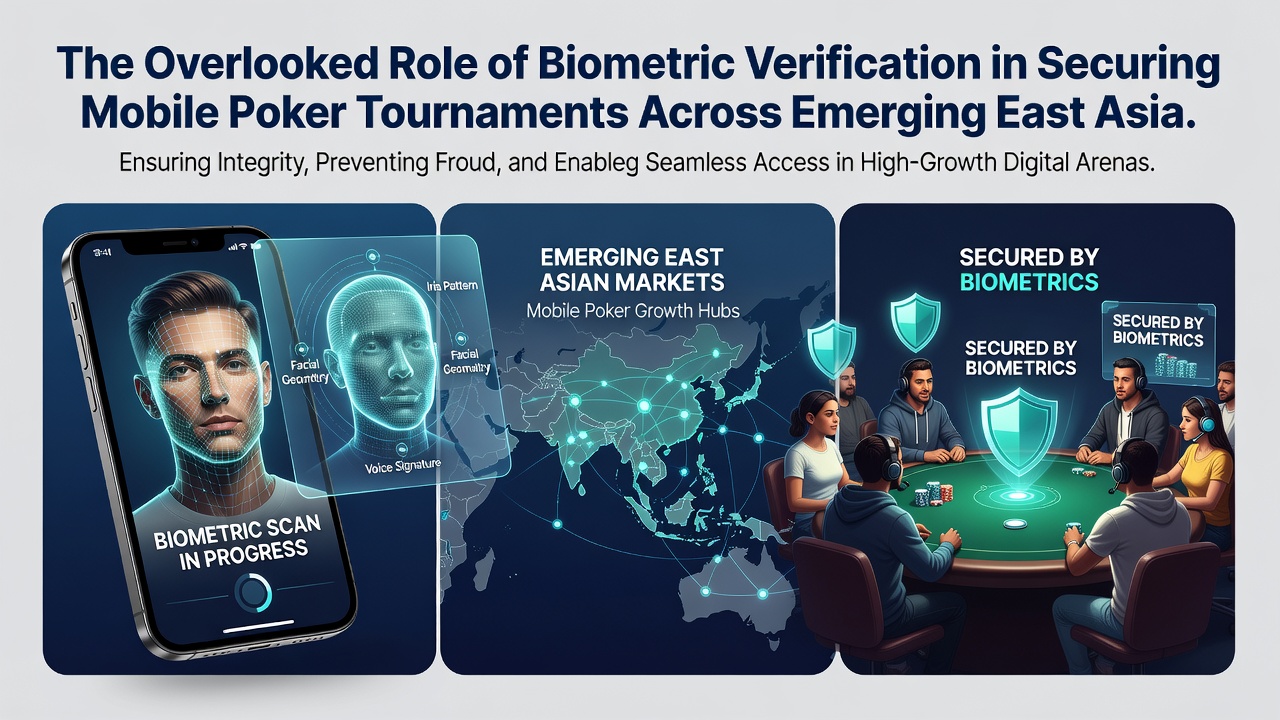
Biometric verification combines facial recognition with fingerprint scanning and voice analysis to confirm player identities during mobile poker tournaments, and this approach addresses fraud risks that have grown alongside the expansion of online gaming platforms in emerging European markets such as Poland, Romania and the Baltic states. Data from industry reports shows that these systems reduce account takeover attempts by integrating multiple biometric markers into a single authentication flow, while operators maintain compliance with regional data protection rules.
Regulatory frameworks in several Eastern European countries require operators to implement identity checks that go beyond traditional passwords, and biometric methods meet those standards because they tie verification directly to physical traits that cannot be easily replicated. Tournament organizers schedule events throughout the year, including major series planned for July 2026, and they rely on these tools to monitor participant eligibility in real time across mobile networks.
Expansion of Mobile Poker in Developing Markets
Operators have expanded mobile poker offerings into markets where smartphone penetration has risen sharply since 2022, and figures reveal steady growth in active tournament participants from countries that recently updated their gaming legislation. These regions feature younger player bases who prefer quick mobile access, yet they also present higher rates of identity-related disputes that biometric systems help resolve through automated checks conducted at login and during high-stakes rounds.
Platform providers integrate biometric prompts at key points such as registration, deposit approval and prize withdrawals, and this layered approach creates audit trails that regulators can review without storing raw biometric data on central servers. Studies conducted by European research institutions indicate that such methods cut verification times by up to 40 percent compared with manual document uploads, allowing tournaments to proceed without extended delays.
Technical Implementation Across Platforms
Developers embed biometric software development kits into poker applications so that devices capture and process traits locally before sending encrypted templates to secure servers, and this on-device processing reduces exposure to interception during data transmission. Emerging market operators partner with technology vendors that specialize in liveness detection, which distinguishes live users from static images or recordings, and those vendors have reported increased demand from Eastern European clients ahead of the 2026 tournament calendar.
Network operators in Poland and Romania have collaborated with gaming firms to test 5G-enabled biometric sessions that maintain accuracy even under variable signal conditions, and test results show consistent performance across urban and rural locations where tournaments draw participants. The systems also flag unusual patterns such as rapid location changes or multiple device logins, triggering additional verification steps that protect both players and prize pools.
Regulatory Alignment and Data Standards
Authorities across emerging markets have aligned biometric requirements with broader digital identity initiatives promoted by the European Commission, and these alignments allow operators to reuse verified templates for multiple services while preserving user consent records. European digital identity frameworks provide guidelines that gaming regulators reference when evaluating new security measures, and operators cite these guidelines during licensing renewals scheduled for late 2026.
Independent audits conducted by certification bodies confirm that biometric solutions meet encryption and retention standards set by national data protection agencies, and the audits include stress tests that simulate attempted breaches using synthetic biometric data. Observers note that markets adopting these standards early have recorded fewer disputes over tournament eligibility, which in turn supports smoother operation of cross-border events that attract players from several countries simultaneously.
Challenges and Adoption Patterns
Some operators encounter resistance from players concerned about data storage, yet education campaigns run by industry groups explain that biometric templates are mathematical representations rather than photographic images, and this distinction helps increase acceptance rates over successive tournament cycles. Adoption has accelerated in markets where regulators introduced incentives for advanced security technology, and data collected through 2025 shows higher compliance scores among platforms that deployed biometrics ahead of competitors.
Training programs for support staff emphasize how to guide users through initial biometric enrollment, and these programs reduce support ticket volumes related to login issues during peak tournament hours. Vendors continue to refine algorithms to account for regional variations in lighting conditions and device types common among Eastern European users, and ongoing updates ensure performance remains stable as hardware evolves.
Conclusion
Biometric verification has become integrated into mobile poker operations across emerging European markets because it delivers measurable reductions in fraud while supporting regulatory compliance and efficient tournament management. As events scheduled for July 2026 approach, operators continue to refine these systems in response to evolving technical standards and player expectations. The combination of local processing, liveness detection and regulatory alignment creates a framework that scales with market growth, and industry reports project further expansion of biometric use in the years ahead.