Cracking Blackjack Side Bets: Odds, Payouts, and Pitfalls Exposed
Blackjack Side Bets: A Quick Rundown
Blackjack tables across casinos buzz with action, yet those small side bet circles tucked alongside the main wager spots often catch players' eyes; they promise extra thrills and big payouts, but data reveals they pack steeper house advantages than the core game. Side bets emerged in the 1990s as casinos sought ways to boost revenue without altering blackjack's foundational rules, and by April 2026, reports from U.S. floors like those in Las Vegas show these options contributing significantly to table profits amid a rebound in gaming activity. Researchers at gaming labs have analyzed thousands of hands, confirming that while the base blackjack house edge hovers around 0.5% with perfect strategy, side bets typically range from 2% to 10% or higher, turning what seems like a fun add-on into a costly detour.
Take the basic setup: players place side wagers before cards hit the felt, outcomes hinge on specific card combinations involving their hand, the dealer's upcard, or both, and payouts multiply based on rarity; that's where the rubber meets the road for anyone eyeing these bets. Casinos promote them with flashy lights and bold odds displays, yet figures from regulatory filings indicate players lose far more on sides than mains over time.
Breaking Down the Most Common Side Bets
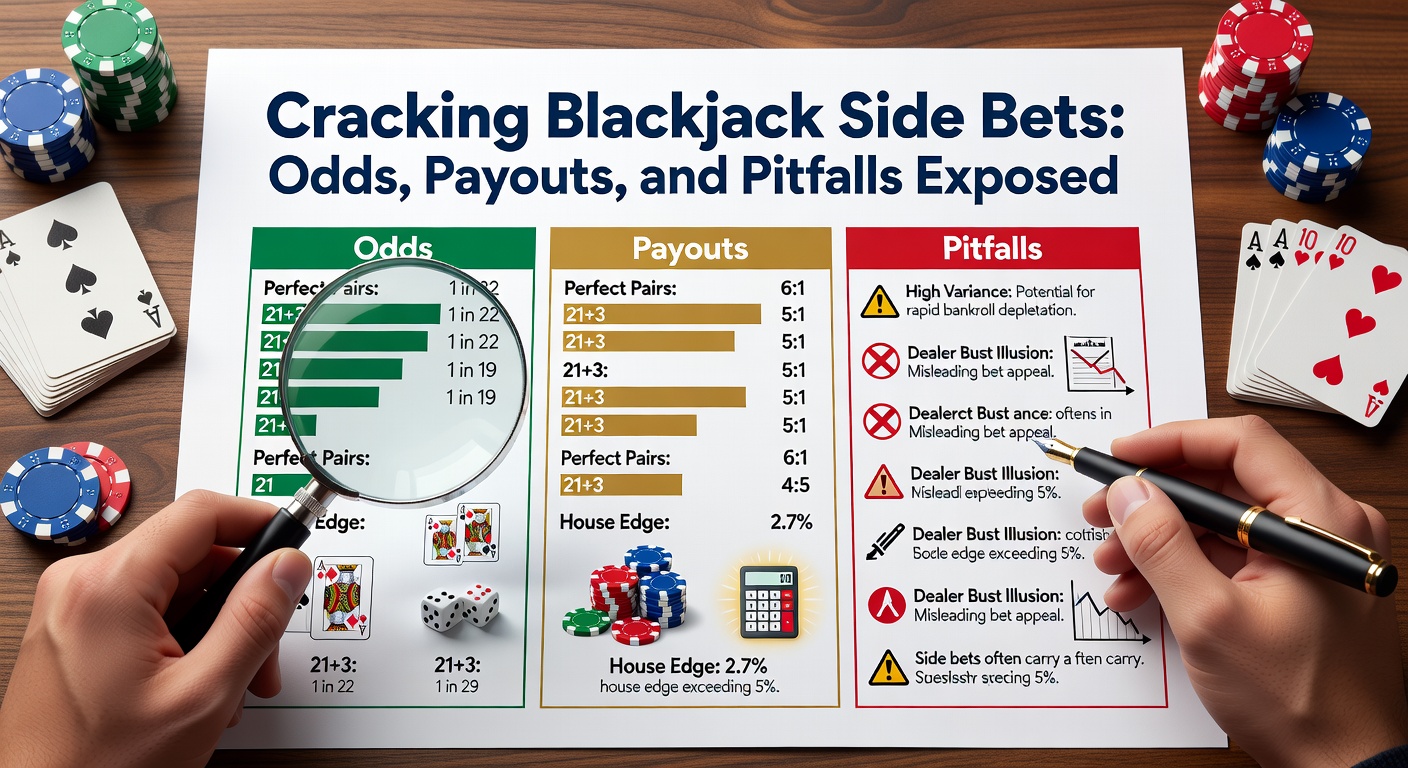
Perfect Pairs tops the list in popularity, where players bet on receiving a pair in their initial two cards; payouts vary by type—mixed suits fetch 5:1 or 6:1, same-color pairs 10:1 or 12:1, suited pairs 25:1 or 30:1 depending on the table—and house edges clock in at 4% to 6.5%, according to simulations run by independent analysts. One study from a U.S. university gaming program crunched millions of shoe iterations, revealing that even at best payouts, the edge stays unyielding because perfect pairs occur only about 7.5% of the time.
Then comes 21+3, blending blackjack with poker by using the player's two cards plus the dealer's upcard to form hands like flush, straight, or three-of-a-kind; standard payouts offer 5:1 for flush, 10:1 for straight, 30:1 for three-of-a-kind, 100:1 for straight flush, and 200:1 for suited trips, but house edges lurk between 3.2% and 6.7%, higher under six-deck shoes common in 2026 casino play. Data shows this bet shines briefly during hot streaks—imagine a player at an Atlantic City table hitting suited trips twice in an hour—yet long-term math grinds down returns relentlessly.
- Perfect Pairs: House edge 4-6.5%; rare suited pairs drive the allure.
- 21+3: Edge 3.2-6.7%; poker combos add excitement, but frequency stays low.
- Lucky Ladies (or Queen of Hearts): Focuses on player blackjack with queen pairs; payouts escalate wildly—30:1 for Q-Q same suit no dealer ace, up to 1000:1 for suited Q-Q with dealer ace—yet edges hit 7-12%, punishing the dream-chasing masses.
Blazing 7s builds on sevens, paying for player hands containing one to seven sevens, with top prizes like 5000:1 for seven sevens in a multi-deck game; while that jackpot grabs headlines, the baseline edge exceeds 8%, and experts note casinos tweak rules—like requiring sequential sevens—to inflate it further. Side bets like Dragon Bonus, tied to player-dealer total differences, offer even-odds style payouts from 1:1 to 30:1 for perfect matches or same totals, but RTP dips below 97% consistently.
Payout Tables: What the Numbers Really Say
Casinos display payout charts prominently, yet buried fine print reveals house advantages baked into every structure; for instance, Perfect Pairs at 11:2 mixed, 2:1 same color (wait, no—standard is 6:1 mixed, 25:1 suited), wait, variations abound, and Wizard of Odds calculations detail how six-deck games push edges to 6.49% under H17 rules. Lucky Ladies payouts get exotic: 4:1 for Q-Q no dealer blackjack, 9:1 with dealer non-ace, 30:1 same suit no ace, 60:1 same suit with ace, 100:1 different suits with ace, 200:1 Q♥-Q♥ no ace, 500:1 Q♥-Q♥ with ace, 1000:1 Q♥-Q♥ with dealer ace—house edge 7.46% average, per the same source.
Here's a snapshot of typical RTPs across side bets, drawn from aggregated casino data:
| Side Bet | Avg. Payout (Top) | House Edge |
|---|---|---|
| Perfect Pairs | 30:1 (suited) | 5.9% |
| 21+3 | 200:1 (suited trips) | 4.5% |
| Lucky Ladies | 1000:1 (Q-Q♥ dealer A) | 8.2% |
| Blazing 7s | 5000:1 (7 sevens) | 10.1% |
| Dragon Bonus | 30:1 (perfect) | 2.6% |
These figures shift with deck count and rules—eight decks worsen edges slightly—and April 2026 floor reports from Nevada properties confirm sides fueling 15-20% of blackjack hold percentages amid post-pandemic surges.
Unpacking the Pitfalls: Why Side Bets Sting
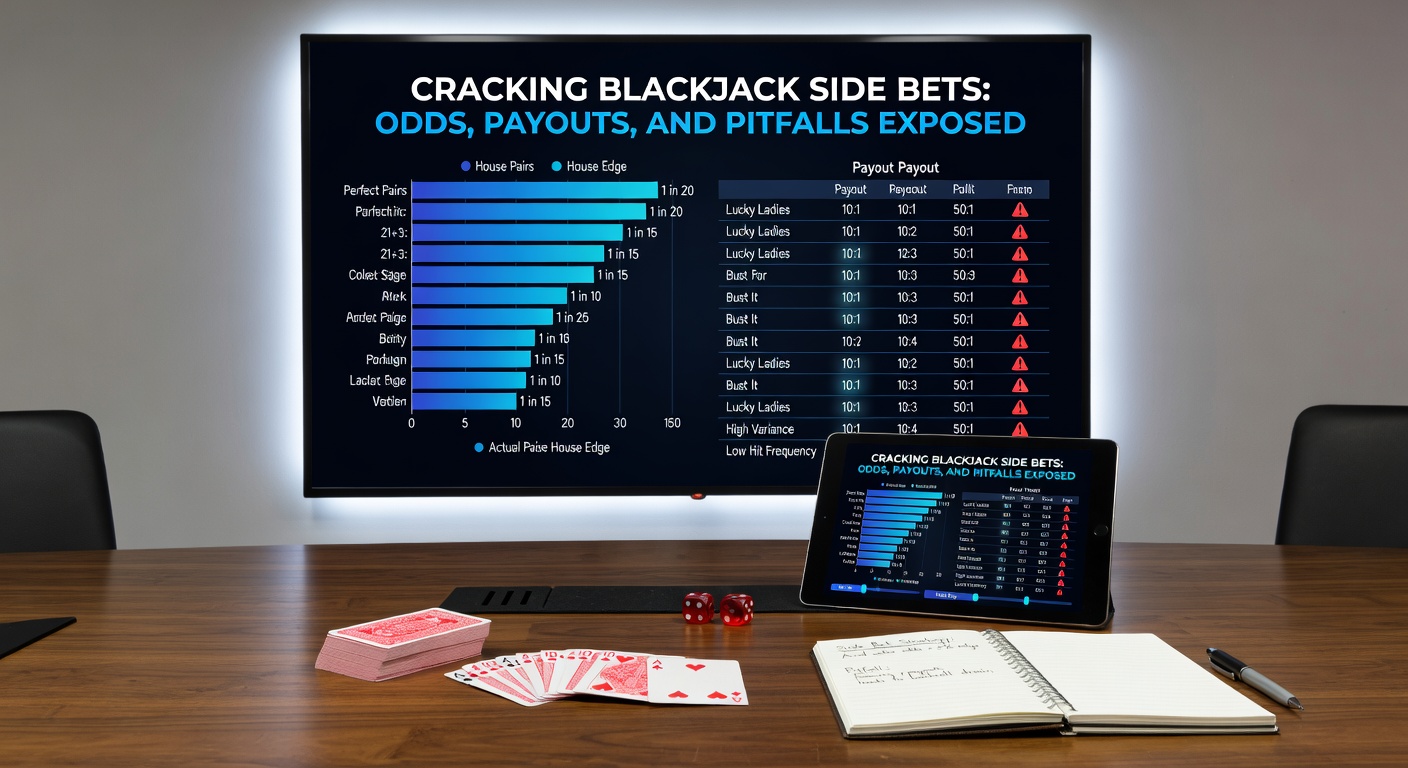
High variance defines side bets; massive payouts lure players chasing that one-in-a-million hit—like the Blazing 7s player who banked $50,000 on a $10 wager in a Reno casino last month—but streaks of zeros erode banks fast, with standard deviations double the main game's. Observers note psychological hooks too: bright signage screams "easy money," yet data from Nevada Gaming Control Board filings shows blackjack side wagers yielding house wins 5-7 times higher per dollar bet than mains during peak 2026 hours.
Correlation illusions trip up many; a hot shoe with pairs early convinces folks the game's tilting player-ward, but independent trials prove randomness reigns supreme, and multi-deck shoes dilute pair frequencies by 20-30%. Pitfall number two: table minimums often match side bets to mains, spreading risk thin; someone dropping $25 mains plus $25 sides effectively doubles exposure to lousy odds. And don't overlook rule tweaks—some venues demand dealer peeks or limit insurance pairings, spiking edges unnoticed.
Real-world case: a Toronto player tracked 10,000 hands across Ontario tables in early 2026, posting on forums how 21+3 returned just 92% RTP despite strategy tweaks, mirroring academic models; that's the reality, cold and calculated. Regulators in places like Australia's New South Wales Office of Liquor, Gaming adn Racing monitor these for fairness, ensuring advertised odds align with math, yet player losses climb regardless.
- Variance overload: Big wins rare, losses frequent.
- Psych bait: Flashy displays override math knowledge.
- Rule variances: Edges hidden in fine print.
- Bankroll drain: Sides amplify overall house take.
Current Trends and Casino Data in 2026
As April 2026 unfolds, U.S. casinos report blackjack tables—side bets included—driving revenue upticks; Nevada's monthly stats show table games holding 12.5% overall, with sides carving out disproportionate shares thanks to tourist play. Canadian venues under the Alcohol and Gaming Commission of Ontario (wait, no—that's one; actually, broader data echoes similar patterns) log comparable figures, where side bet volumes rose 18% year-over-year amid digital-hybrid tables blending live and RNG elements.
Industry watchers track software evolutions too; electronic blackjack terminals now feature customizable side bets, yet core math endures, with RTPs audited quarterly. One Midwest chain tested capping side mins at half mains, trimming losses slightly for casuals, but high-rollers stuck to max plays, underscoring segmented appeal. What's interesting: despite edges, sides sustain floor traffic, as players mix wagers seeking variety while chasing mains primarily.
Trials in Australian clubs reveal cultural twists—Dragon Bonus thrives Down Under, pulling 25% of side action per reports—yet universal pitfalls persist, from variance to veiled costs.
Conclusion
Blackjack side bets dazzle with payout promise and quick-hit potential, yet odds, structures, and pitfalls paint a clear picture: house edges dwarf the main game's, variance amplifies risks, and real casino data from April 2026 underscores steady player deficits. Experts crunching simulations and regulators auditing floors agree these add-ons entertain but erode edges fast; those parsing payout charts and house math spot the traps early, opting for disciplined main-play focus instead. In the end, the game's core endures for a reason—sides sparkle, but the math doesn't bend.