Detroit's Casinos Hit $112.3 Million in March 2026 Revenue, Showing Rebound from February but Dip from Last Year

The Latest Figures from Michigan's Gaming Oversight
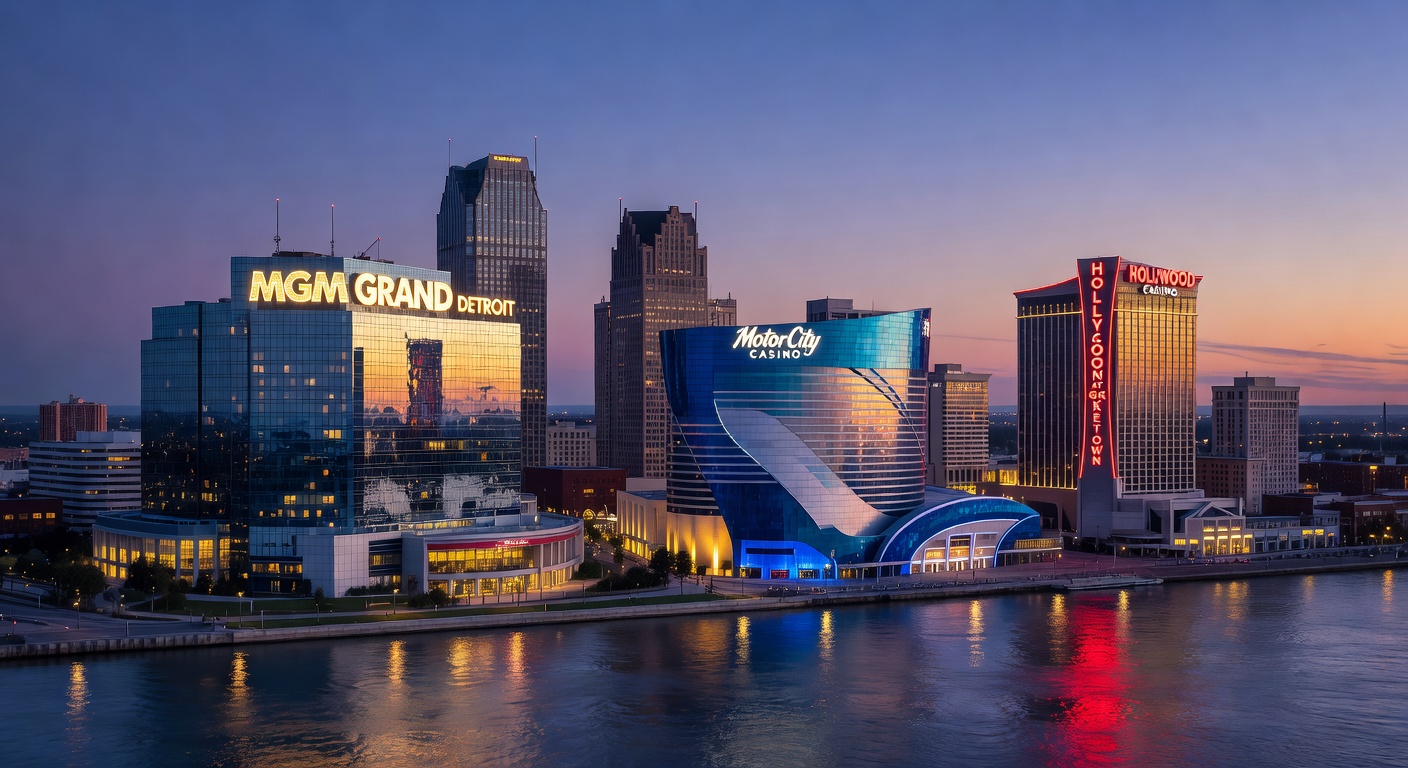
Detroit's three powerhouse commercial casinos—MGM Grand Detroit, MotorCity Casino, and Hollywood Casino at Greektown—posted a combined aggregate revenue (AGR) of $112.3 million for March 2026, according to the official monthly report released by the Michigan Gaming Control Board in early April; this total reflects activity across table games, slots, and retail sports betting, where table games and slots alone drove $111.5 million, while retail sports betting chipped in $810,424 in qualified adjusted gross receipts.
What's interesting here is how these numbers capture a snapshot of recovery amid seasonal shifts, since the gaming floors saw an 11.5% jump from February 2026's totals but a 4.5% slide compared to March 2025; observers tracking the industry point out that such fluctuations often tie back to everything from tourist traffic to broader economic pulses in the Motor City region.
And as April 2026 unfolds with warmer weather drawing crowds, these March stats offer a baseline for what's next, especially since the Michigan Gaming Control Board continues to publish these breakdowns promptly each month to keep stakeholders informed.
Breaking Down Table Games and Slots: The Core Revenue Engine
Table games and slots formed the backbone of the month's haul at $111.5 million, a figure that underscores their dominance in Detroit's casino ecosystem; data reveals this segment climbed 11.5% from February 2026, signaling a strong intra-year rebound likely fueled by spring break visitors and local patrons shaking off winter blues, yet it dipped 4.5% against March 2025 when higher footfall from events pushed numbers higher.
Take MGM Grand Detroit, for instance, which leads the pack—its slice of this pie contributed heavily to its overall market position; MotorCity Casino and Hollywood Casino at Greektown followed suit, each leveraging packed floors where blackjack tables buzzed alongside rows of slot machines flashing lights and payouts.
But here's the thing: these casinos operate under strict licensing from the Michigan Gaming Control Board, ensuring every dollar tracked flows through audited channels, so the $111.5 million stands as a verified pillar of the industry's transparency.
Sports Betting's Notable Uptick Steals the Spotlight
Retail sports betting, though a smaller piece at $810,424 in qualified adjusted gross receipts, delivered a standout performance with a 41.9% surge year-over-year from March 2025; this boost aligns with expanded betting options on major leagues and events that pulled in enthusiasts during the month's prime sports calendar, including lingering March Madness action and early MLB starts.
Experts who've studied Michigan's gaming trends note how sports wagering has carved out a growing niche since legalization, and these figures from Detroit's trio illustrate that momentum building steadily; across the three properties, bettors placed wagers at dedicated retail windows, contributing to the overall AGR without overshadowing the traditional gaming floors.
So while table games and slots hold the lion's share, this sports segment's growth hints at diversification paying off, especially as mobile and online options complement the in-person experience elsewhere in the state.
Market Share Breakdown: MGM Reigns Supreme
MGM Grand Detroit commanded 47% of the market with $51.9 million in AGR, solidifying its top-dog status among the Detroit trio; MotorCity Casino secured 31% at $34.9 million, while Hollywood Casino at Greektown rounded out the field with 22% and $24.7 million, together painting a picture of competitive yet stable positioning in the city's gaming hub.
These shares, derived directly from the Michigan Gaming Control Board's data, reflect not just raw revenue but operational efficiencies like occupancy rates and promotional draws; for example, MGM's edge often stems from its expansive hotel-casino setup attracting out-of-towners, whereas MotorCity thrives on local loyalty programs, and Greektown leverages its central urban vibe.
Yet across the board, the percentages add up precisely to 100%, a testament to the comprehensive tracking that leaves no revenue stream unaccounted for in the monthly filings.
Year-over-Year and Month-over-Month Comparisons Unpacked
Month-to-month, the 11.5% rise in table games and slots revenue from February to March 2026 marks a welcome pivot, as colder months typically see lighter traffic before spring revives the scene; year-over-year, however, that 4.5% decline from March 2025 highlights headwinds like inflation's bite on disposable income or competing entertainment pulling crowds elsewhere.
People familiar with casino metrics often point to these dual trends—short-term bounces versus longer-view soft spots—as normal in a mature market like Detroit's, where the three casinos have operated since the early 2000s under evolving regulations; the sports betting jump of 41.9% year-over-year stands in stark contrast, underscoring how newer verticals can offset traditional dips.
And now, with April 2026's report due soon, analysts watch closely to see if March's upward momentum holds, particularly as events like the Detroit Grand Prix loom on the horizon.
Year-to-Date Context: A Slight Overall Downturn
Through the first quarter of 2026, casino gaming revenue across these Detroit properties trails 2025 by 0.8%, a marginal pullback that the Michigan Gaming Control Board flagged in its April release; this YTD figure encompasses all categories, blending the month's mixed bag into a broader narrative of steady but tempered performance.
Observers note such year-to-date metrics provide the real litmus test for sustainability, especially since 2025 set a high bar with post-pandemic surges; breakdowns show table games holding resilient, slots fluctuating with jackpot cycles, and sports betting steadily ascending to buoy the totals.
There's this case from prior months where February's softer numbers presaged March's rebound, suggesting seasonal patterns at play rather than structural woes—a dynamic those who've tracked Michigan gaming for years recognize all too well.
What These Numbers Mean for Detroit's Gaming Scene
Detroit's casinos contribute significantly to the local economy through taxes, jobs, and tourism, with March 2026's $112.3 million AGR feeding into those streams under the oversight of the Michigan Gaming Control Board; licensing requirements mandate detailed reporting, ensuring figures like MGM's 47% share translate to tangible fiscal impacts for the city and state coffers.
But here's where it gets interesting: while the 4.5% YoY drop in core gaming garners attention, the 11.5% MoM gain and sports betting's 41.9% leap signal adaptability; properties like MotorCity, with its 31% hold, invest in tech upgrades and player perks to maintain edges, much as Hollywood's 22% slice benefits from Greektown's historic district allure.
So as April 2026 progresses, these casinos gear up for summer peaks, drawing on March's data to fine-tune strategies without missing a beat in the competitive landscape.
Conclusion
March 2026 delivered $112.3 million in aggregate revenue for Detroit's MGM Grand Detroit, MotorCity Casino, and Hollywood Casino at Greektown, with table games and slots at $111.5 million showing an 11.5% monthly increase yet a 4.5% annual decline, alongside sports betting's robust 41.9% year-over-year growth to $810,424; market shares held steady at 47%, 31%, and 22% respectively, while year-to-date totals edged down 0.8% from 2025.
These figures, straight from the Michigan Gaming Control Board's report, equip industry watchers with clear insights into trends shaping the sector, setting the stage for April's developments and beyond in Michigan's vibrant gaming ecosystem.