Esports Betting Expands Through Casino Loyalty Program Networks
Written by Zoe Hansen · Jun 27, 2026
Esports Betting Expands Through Casino Loyalty Program Networks
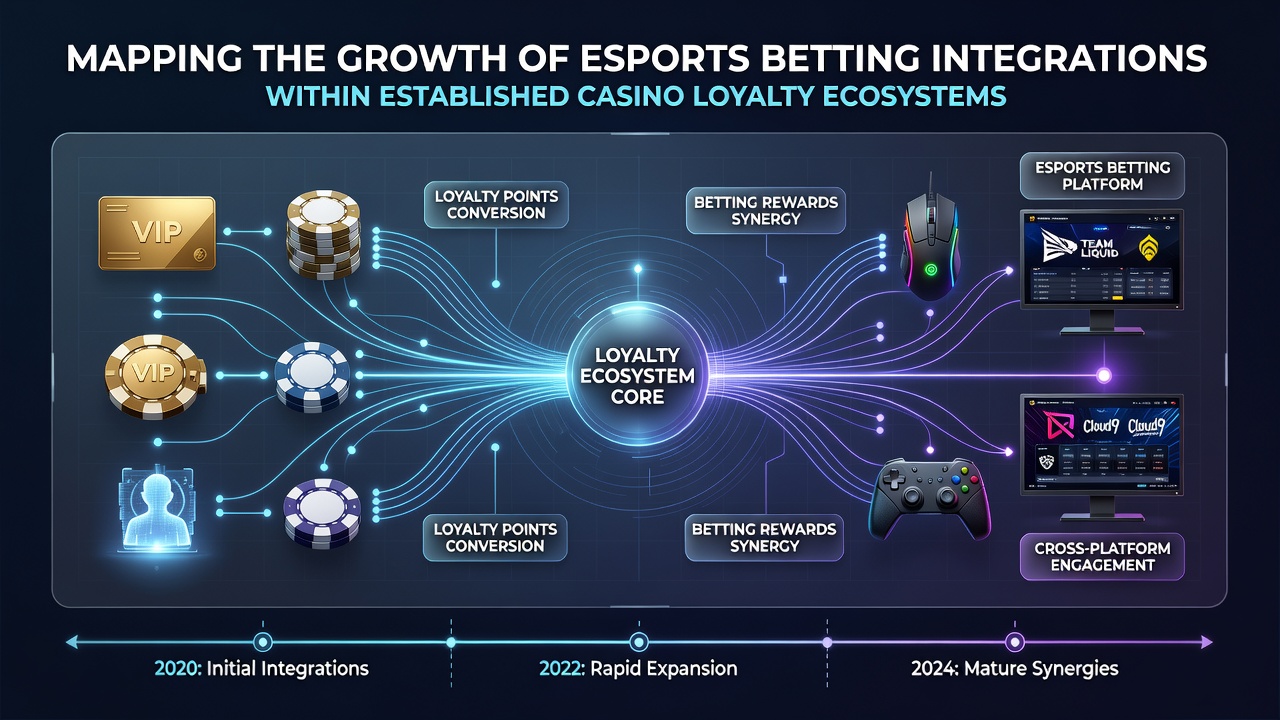
Esports betting has moved steadily into established casino loyalty ecosystems over recent years, with operators linking tournament wagers directly to existing player reward accounts. This integration allows participants to earn tier points and redeem bonuses across both traditional table games and competitive video gaming markets. Data from multiple jurisdictions shows rising participation rates, particularly among younger demographics who already maintain active casino accounts.
Operators achieve these connections through API bridges that synchronize betting activity from licensed esports platforms with central loyalty databases. When a player places a wager on a major tournament, the system records the transaction and awards points based on predefined formulas tied to stake size and outcome frequency. Those points accumulate alongside slots and table play, creating unified profiles that track behavior across entertainment verticals.
Technical Frameworks Supporting Unified Tracking
Modern loyalty systems rely on standardized data protocols that permit real-time updates from third-party esports betting engines. These protocols handle currency conversion, risk assessment, and compliance checks without requiring separate logins or duplicate verification steps. Several major platforms completed infrastructure upgrades in late 2025 that expanded capacity for simultaneous esports and casino session monitoring.
One study conducted by researchers at the University of Nevada, Reno examined transaction logs from integrated operators and found measurable increases in cross-category engagement after loyalty unification. Participants who combined esports wagers with traditional gaming showed higher retention rates compared with single-category users, according to the published findings.
Regional Patterns and June 2026 Developments
North American markets have seen accelerated adoption following regulatory clarifications issued in early 2025. State gaming commissions now require operators to maintain separate ledgers for esports activity while still permitting unified reward structures. This approach satisfies audit requirements yet preserves the seamless experience players expect from loyalty programs.
European operators followed a parallel path with several jurisdictions updating licensing conditions in spring 2026. In June 2026 the Malta Gaming Authority released updated technical standards that explicitly address esports data feeds within loyalty environments. These standards mandate encryption protocols and audit trails that align with existing casino reporting obligations.
Australian regulators have also examined similar frameworks. The Australian Communications and Media Authority published guidance documents in 2025 that outline permissible data-sharing practices between esports betting providers and land-based loyalty systems. Operators in that region report steady growth in linked accounts, with figures showing consistent month-over-month increases through the first half of 2026.
Player Behavior and Reward Mechanics
Players receive tier progression benefits when esports activity contributes to overall spend thresholds. Many programs now convert esports wager volume into casino comps using equivalent point values, allowing users to unlock hotel stays, dining credits, or event access through combined participation. This structure encourages multi-format engagement without forcing players to switch between separate applications.
Analysts tracking these systems note that loyalty tiers influence betting patterns. Higher-tier members often receive targeted esports promotions that align with upcoming tournaments, creating feedback loops where rewards drive additional activity. The European Gaming and Betting Association has documented these dynamics in industry reports that compare loyalty metrics before and after integration.
Compliance and Data Security Considerations
Regulatory bodies emphasize the need for clear separation between esports risk pools and traditional gaming funds. Integrated operators maintain distinct settlement processes while still routing loyalty calculations through a single engine. This dual-track approach reduces exposure during audits and simplifies dispute resolution when outcomes require review.
Data protection standards require explicit consent for cross-platform tracking. Most systems now present unified privacy notices that explain how esports wagers contribute to casino reward calculations. Operators who fail to maintain transparent consent flows have faced corrective orders in multiple jurisdictions.
Conclusion
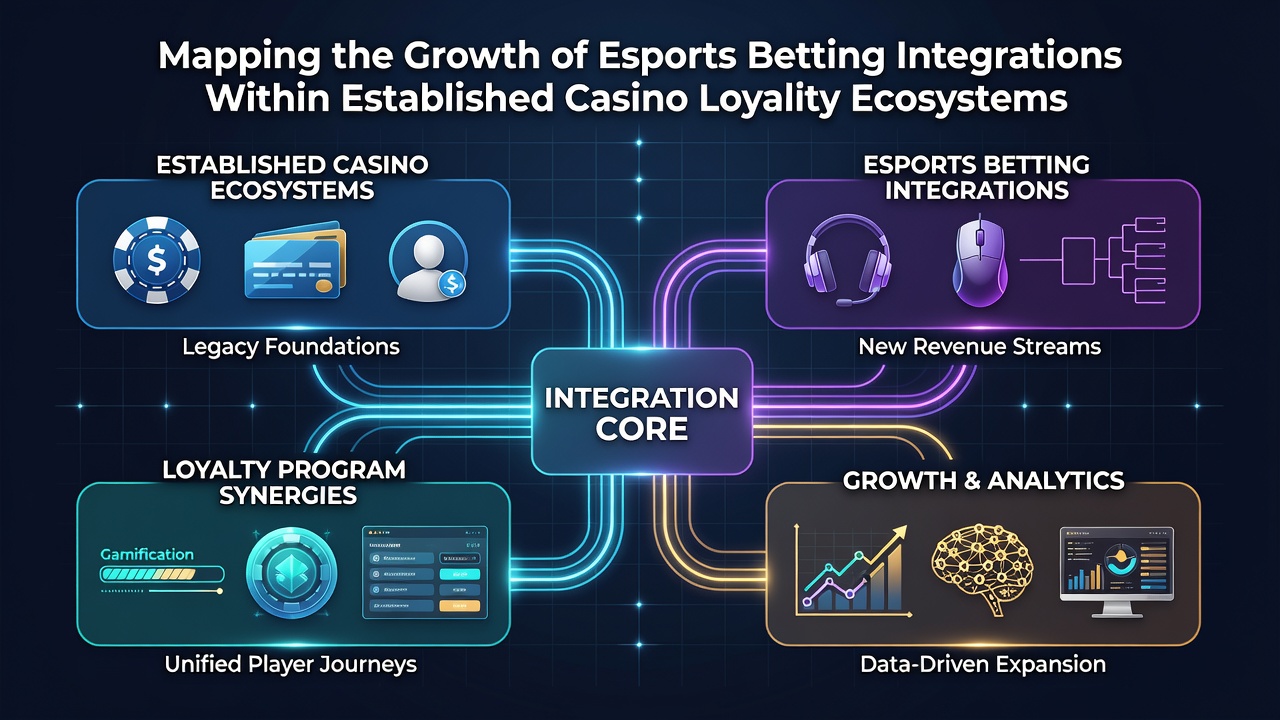
The mapping of esports betting integrations within casino loyalty ecosystems reveals consistent technical and regulatory progress across regions. Unified tracking systems, updated standards from authorities such as the Malta Gaming Authority, and documented player behavior patterns indicate sustained expansion through 2026 and beyond. Operators continue refining these connections to meet compliance demands while preserving the reward continuity that loyalty members expect.