Patterns in Mobile Device Handling and Their Effects on Blackjack Decision Precision
Written by Zoe Hansen · Jun 15, 2026
Patterns in Mobile Device Handling and Their Effects on Blackjack Decision Precision
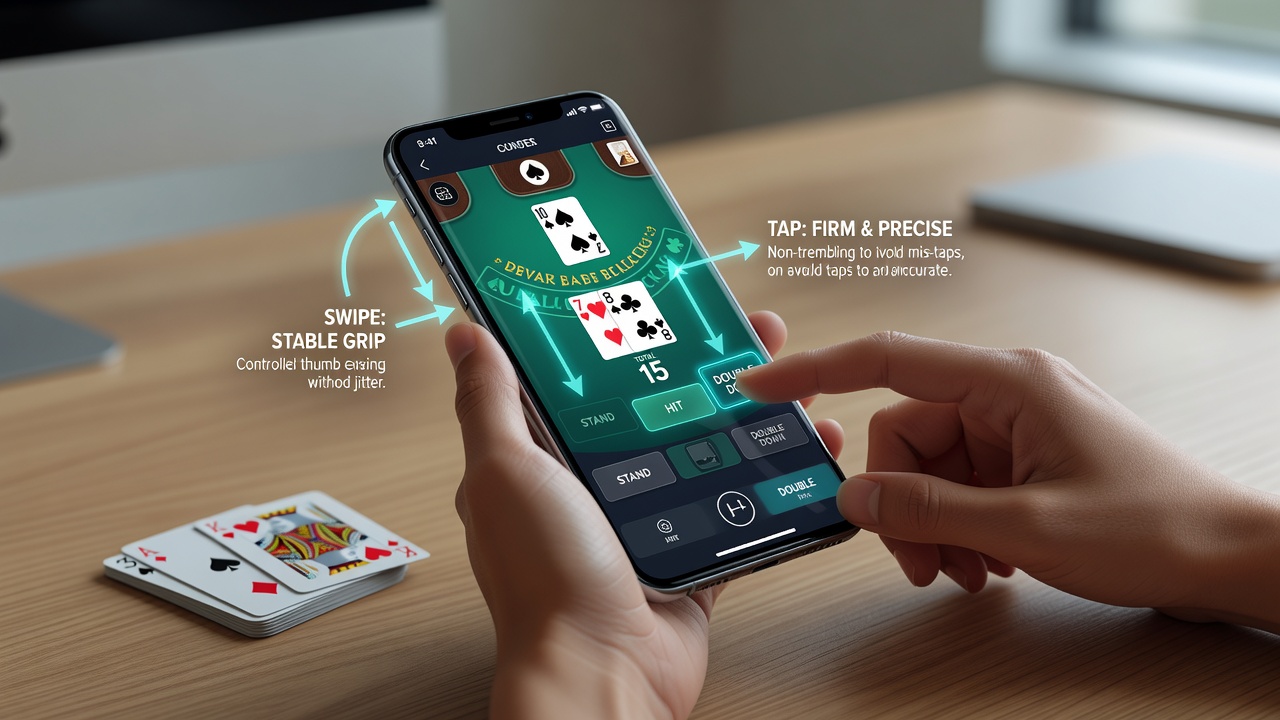
Players interact with mobile blackjack applications through a range of physical device handling methods that include one-handed grips, two-handed cradles, and landscape or portrait orientations, and these methods connect directly to variations in touch input accuracy during gameplay, according to data from human-computer interaction research. Touchscreen responses depend on finger placement, pressure distribution, and device stability, while movement during play introduces additional variables that influence how quickly and correctly users select actions such as hit, stand, or double down.
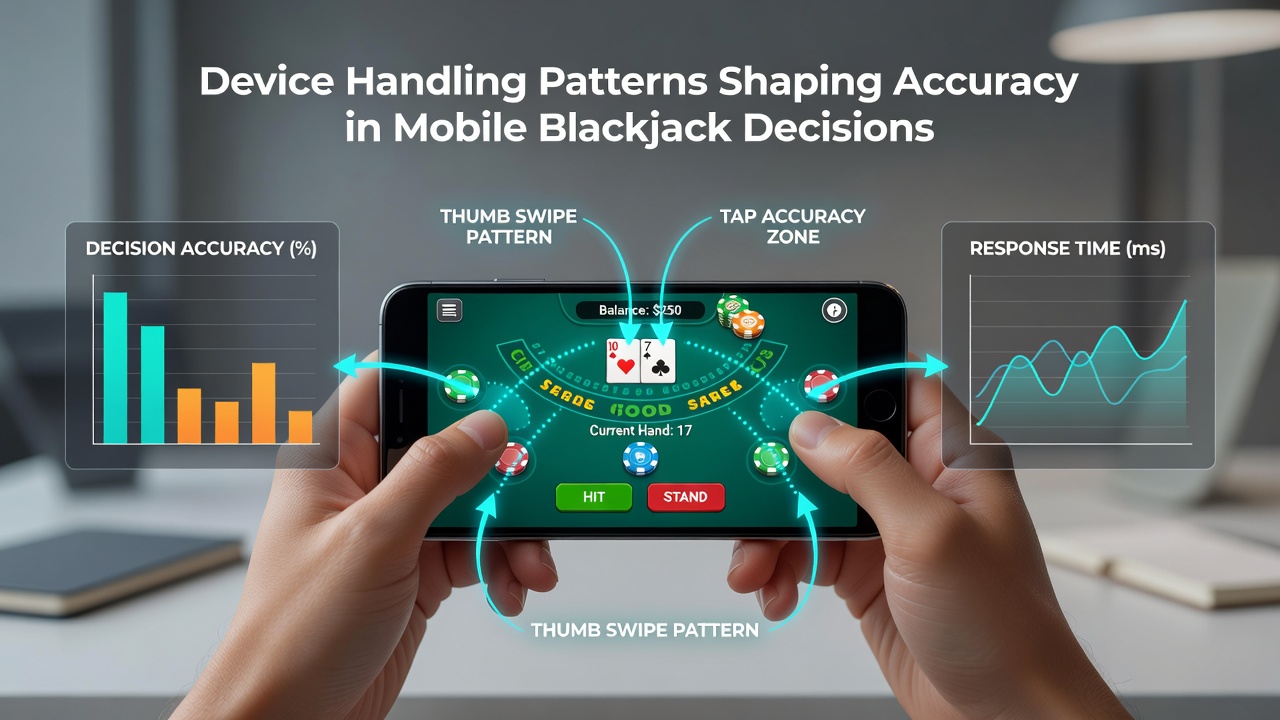
Research indicates that one-handed operation often leads to thumb-based taps that cover larger screen areas, increasing the chance of unintended selections near decision buttons, whereas two-handed approaches allow index finger precision and reduce such errors. Device orientation plays a further role because portrait mode compresses the playing field into a narrower vertical space, and landscape mode spreads elements horizontally yet requires users to adjust their grip to maintain balance.
Common Handling Patterns Observed in Mobile Play
Observers note several recurring patterns across player sessions. Many users hold phones vertically with one hand while the thumb performs all taps, and this setup appears frequently in public settings where the other hand remains occupied. Others switch to a horizontal hold when seated, resting the device on a surface or cradling it between both palms for stability during longer rounds. Data shows these choices shift based on context, such as commuting versus relaxed home environments, and each pattern correlates with measurable differences in response timing and selection accuracy.
Studies from the University of Toronto's HCI lab have tracked how grip angle affects tap registration on capacitive screens, revealing that angled holds change the contact point of the fingertip and sometimes register inputs slightly offset from the intended target. Players who frequently rotate their devices mid-session encounter additional recalibration demands from the software, and this rotation cycle introduces brief pauses that interrupt decision flow.
Links Between Handling and Decision Outcomes
Accuracy in blackjack decisions relies on rapid, correct inputs because the game advances on fixed timers in many applications. When handling patterns produce mis-taps, users may select an unintended action that alters the round outcome, and repeated instances compound into larger session variances. Figures from mobile analytics platforms indicate that portrait-mode one-handed play registers approximately 12 percent more erroneous taps near action buttons compared with two-handed landscape use.
Regulatory reports from the Nevada Gaming Control Board document player complaint categories related to mobile platforms, and input-related issues rank among the top technical concerns submitted through official channels. These records show that handling-induced errors occur more often during peak usage hours when network latency combines with physical input challenges. Developers respond by enlarging touch targets and adding confirmation prompts, yet the underlying physical patterns remain a persistent factor.
Technological Adjustments and Player Adaptations
Application interfaces incorporate adaptive layouts that detect orientation changes and resize elements accordingly, and these features help mitigate some handling effects. Haptic feedback systems provide tactile confirmation of registered taps, allowing users to adjust grip without looking away from the cards. Research published by the Australian Institute of Health Innovation examined player adaptation over repeated sessions and found that individuals gradually modify their handling to favor more stable two-handed positions when accuracy matters most.
Industry organizations such as the European Gaming and Betting Association compile usage statistics that track device models alongside reported error rates, and newer phones with larger screens and improved sensors show lower incidence of handling-related misinputs. Players also employ accessories like grips and stands that alter natural handling patterns, and these tools appear in both casual and competitive mobile environments.
Broader Context in June 2026
As of June 2026, mobile blackjack continues to expand within regulated markets, and platform updates increasingly address input precision through refined algorithms that predict common handling variations. Government agencies in multiple regions monitor these developments as part of ongoing software certification processes, and data collected from live operations feeds back into interface refinements. Patterns observed today build on earlier findings yet reflect newer hardware capabilities that change how users physically engage with their devices during play.
Conclusion
Device handling patterns connect to decision accuracy through measurable effects on touch registration, timing, and error frequency in mobile blackjack applications. Continued collection of usage data from sources such as the Nevada Gaming Control Board and academic studies supports ongoing improvements in interface design and player guidance features, while the physical realities of holding and interacting with smartphones remain central to how decisions translate from intention to action on screen.