Securing Live Interactions: Encryption Protocols in Mobile Real-Time Dealer Platforms
Written by Noah Ludwig · Jul 20, 2026

Securing Live Interactions: Encryption Protocols in Mobile Real-Time Dealer Platforms
Data encryption protocols form the backbone of secure real-time dealer interactions on portable devices, where video streams and player inputs travel between mobile applications and remote gaming studios. These systems rely on layered cryptographic methods to protect sensitive information during live sessions that involve card dealing, betting decisions, and payout confirmations. Research from industry reports shows that mobile users accessing live dealer games generate continuous data flows requiring both transit and storage protections.
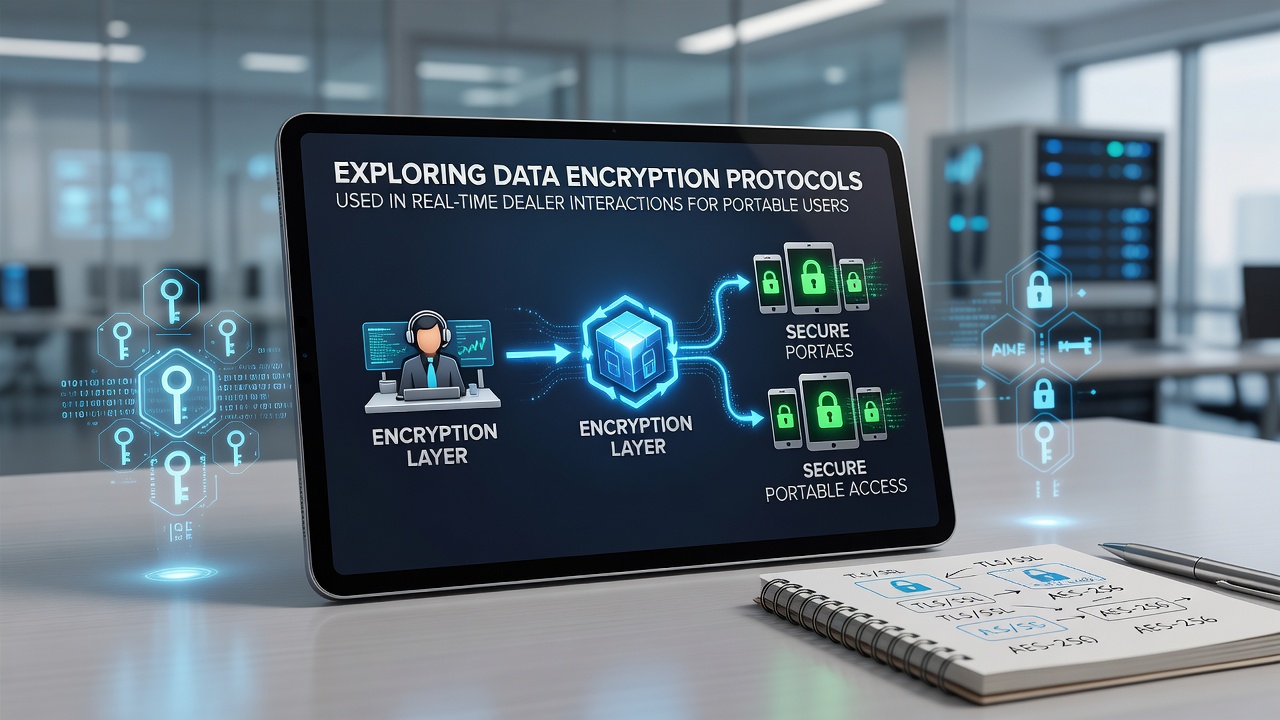
Transport Layer Security versions 1.2 and 1.3 serve as the primary protocol suite for securing connections in these environments. TLS establishes encrypted tunnels between mobile clients and dealer servers while handling key exchanges through algorithms such as Elliptic Curve Diffie-Hellman. Observers note that many platforms updated their implementations during early 2026 to disable older cipher suites and enforce perfect forward secrecy across all sessions.
Core Cryptographic Components in Live Dealer Mobile Systems
Advanced Encryption Standard with 256-bit keys handles the bulk encryption of video feeds and chat messages once the TLS handshake completes. AES operates in Galois/Counter Mode to provide both confidentiality and integrity checks without introducing noticeable latency on 5G or Wi-Fi networks. Those who manage gaming infrastructure report that hardware acceleration on modern smartphones allows AES-256 operations to run efficiently even during high-definition streams.
Additional protocols supplement TLS and AES in specialized ways. Datagram Transport Layer Security protects UDP-based video transmissions that prioritize speed over guaranteed delivery, while Secure Real-time Transport Protocol adds authentication to individual media packets. Industry organizations such as the National Institute of Standards and Technology have published guidelines that many developers reference when selecting cipher combinations for mobile gaming applications.
Key Management and Authentication Practices
Effective key management remains essential because compromised session keys could expose dealer actions or player financial details. Platforms typically rotate ephemeral keys every few minutes and store long-term certificates on hardware security modules located in certified data centers. Data from regulatory filings indicate that operators conducting business in multiple jurisdictions must satisfy varying requirements for key escrow and audit logging.
Multi-factor authentication integrates with these encryption layers to verify user identity before live sessions begin. Certificate pinning within mobile applications prevents man-in-the-middle attacks by ensuring devices only trust specific public keys issued to authorized studios. Researchers at institutions studying mobile security have documented cases where weak certificate validation allowed interception attempts, prompting developers to strengthen client-side checks.
Performance Considerations for Portable Devices
Real-time dealer interactions demand low latency, so encryption implementations must balance security strength against processing overhead. Developers optimize handshake times by reusing session tickets and deploying content delivery networks that terminate TLS closer to users. Figures from network performance studies reveal that well-configured systems maintain sub-150 millisecond round-trip times even when full encryption stacks are active.
Adaptive bitrate streaming works alongside encryption by adjusting video quality based on available bandwidth while maintaining the same cryptographic protections. Mobile operating systems provide APIs that allow applications to leverage secure enclaves for key storage, reducing exposure risks on devices that users carry constantly. What's interesting is how these optimizations have evolved alongside improvements in mobile chipset designs released through mid-2026.
Regulatory and Compliance Frameworks
Gaming regulators in various regions require documented encryption standards before approving mobile platforms for live dealer operations. The Alcohol and Gaming Commission of Ontario and similar bodies in other jurisdictions mandate annual penetration testing and cryptographic audits. Compliance documentation typically includes details on protocol versions, key lengths, and certificate management procedures that operators must maintain throughout the license period.
International standards bodies continue to influence these requirements as new vulnerabilities emerge. Updates scheduled for implementation around July 2026 focus on post-quantum cryptography preparations, although current live dealer systems still rely primarily on classical algorithms proven effective against today's threat models. Those who conduct compliance work note that documentation must cover both client and server components to satisfy cross-border operational rules.
Conclusion
Encryption protocols continue to evolve in response to both technological advances adn regulatory expectations within the mobile live dealer sector. TLS combined with AES remains the foundation while supplementary mechanisms address specific challenges of real-time video and interactive betting. Ongoing work by standards organizations and testing laboratories ensures that portable users receive consistent protection across different network conditions and device types.