Standards Certification Processes Transform Development Cycles for Global Interactive Card Platforms
Written by Bianca Vogel · Aug 17, 2026
Standards Certification Processes Transform Development Cycles for Global Interactive Card Platforms
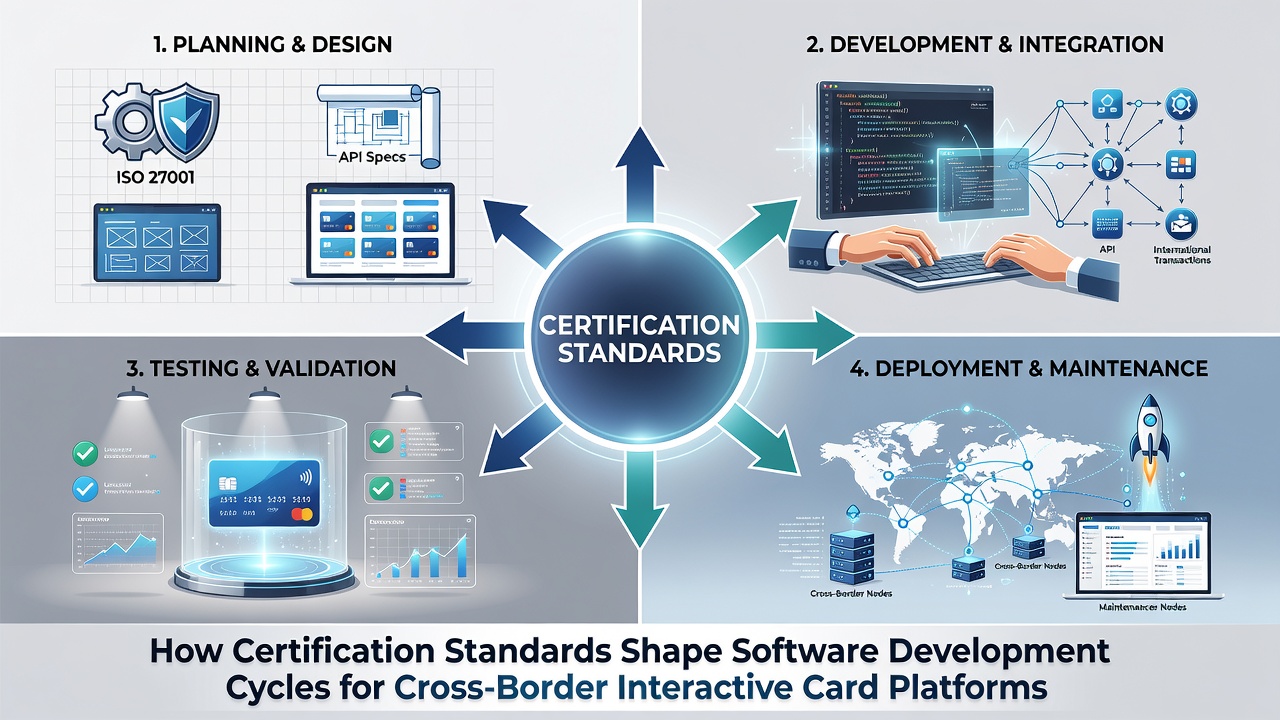
Certification standards establish mandatory checkpoints that teams must complete before launching interactive card platforms across multiple jurisdictions and these requirements directly alter sprint planning, testing protocols, and release schedules. Developers integrate security audits and interoperability tests at earlier stages because regional authorities demand documented proof of compliance with payment card industry rules and data protection frameworks. Teams that once followed a single linear build cycle now insert parallel workstreams to satisfy both technical specifications and legal review boards simultaneously.
Core Standards Driving Timeline Adjustments
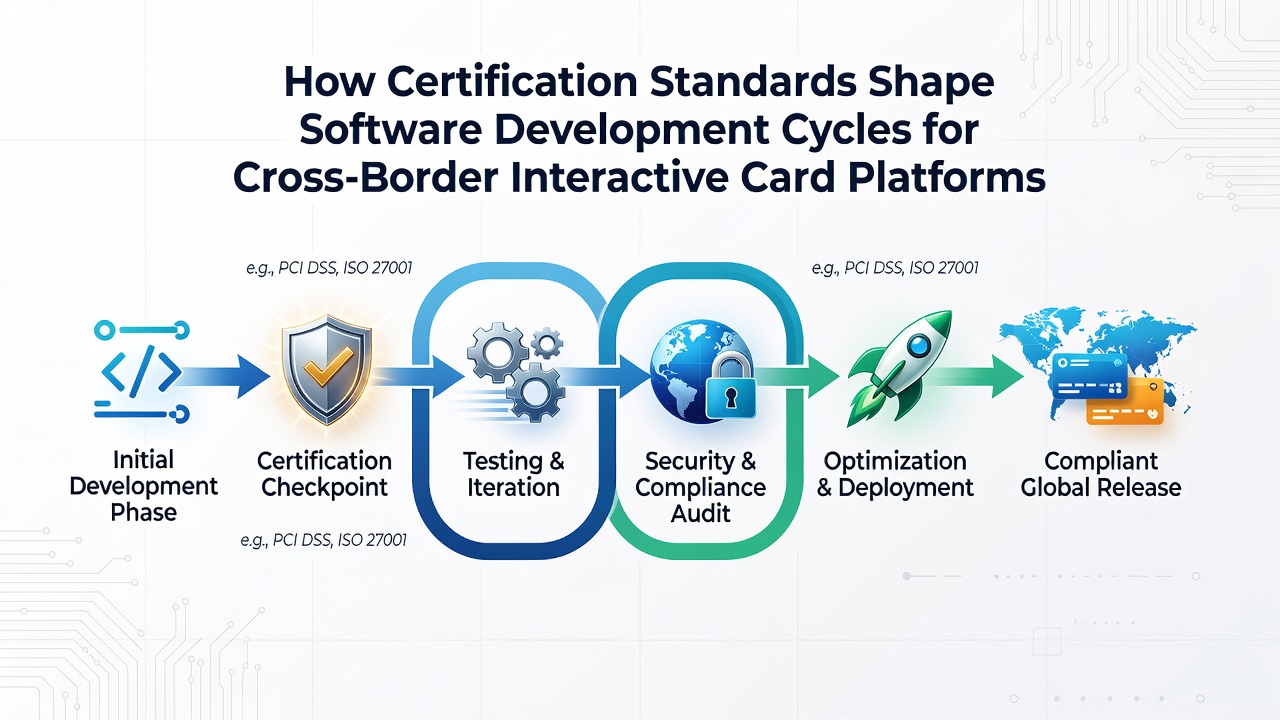
Payment Card Industry Data Security Standard requirements force encryption module validation at the code commit stage while ISO 27001 controls require risk assessment documentation that spans several development phases. Cross-border platforms must also address varying electronic identification rules in the European Union and similar frameworks in Canada and Australia which adds layers of third-party evaluation that extend quality assurance windows by weeks or months. Data from industry reports indicates that projects incorporating these layered reviews experience an average 25 percent increase in pre-release testing duration compared with single-market releases.
One development group working on a multi-region card platform adjusted its agile ceremonies after auditors flagged incomplete audit trails during an initial certification round and the change led to automated logging features being built into the core architecture rather than added later. Such adjustments demonstrate how certification feedback loops reshape backlog priorities and force earlier collaboration between engineering and compliance specialists.
Integration of Testing and Documentation Workflows
Teams now embed certification checklists into continuous integration pipelines so that every build generates the artifacts required by external evaluators and this practice reduces last-minute documentation scrambles that previously delayed launches. Automated tools scan for known vulnerabilities listed in common criteria catalogues while human reviewers focus on jurisdiction-specific rules such as transaction monitoring thresholds or user consent mechanisms. The shift allows shorter iteration cycles within each sprint even though overall project duration grows because of sequential approval gates.
Observers note that platforms targeting markets in Asia-Pacific alongside North American corridors face additional smart card interface tests that reference both EMV specifications and local banking regulations. These overlapping demands prompt the creation of modular code components that can be re-certified independently when one region updates its rules without forcing a full re-evaluation of the entire system.
Impact on Release Cadence and Resource Allocation
Release schedules for cross-border platforms have moved from quarterly cycles to staggered rollouts where certified modules reach production first while newer features undergo extended validation in sandbox environments. Resource planning now accounts for dedicated compliance engineers who participate in daily stand-ups and this integration prevents downstream rework that occurs when security findings surface close to planned launch dates. Figures from recent industry analyses reveal that organizations maintaining in-house certification expertise reduce external audit costs by approximately 15 percent over multi-year development programs.
As of August 2026 several platforms are preparing for updated interoperability tests that incorporate revised cryptographic algorithms mandated by certain national regulators and development teams have already allocated additional sprints to accommodate the transition. The preparation involves updating hardware security modules and re-validating end-to-end transaction flows which illustrates how external policy changes continue to influence internal timelines long after initial certification.
Case Examples from Multi-Region Deployments
A project serving both European and Latin American markets encountered delays when one jurisdiction introduced new data residency rules mid-cycle and the team responded by splitting the data layer into region-specific services that could be certified separately. This architectural decision allowed the core interactive card logic to proceed on schedule while the affected service underwent targeted review. Similar patterns appear in reports from developers who work with evolving standards from bodies such as the PCI Security Standards Council and national agencies in Australia and Canada.
Those who have managed successive certification rounds observe that early engagement with testing laboratories shortens the gap between feature freeze and final approval because laboratories can begin preliminary reviews on incomplete builds. The approach trades some upfront coordination effort for reduced risk of major findings that would otherwise push release dates into subsequent quarters.
Conclusion
Certification standards continue to reshape every phase of software development for cross-border interactive card platforms by inserting mandatory validation points that affect architecture choices, testing automation, and release sequencing. Teams that treat these requirements as integral design constraints rather than post-development hurdles achieve more predictable timelines across successive product iterations. Ongoing updates from regulatory sources ensure that development cycles remain dynamic and responsive to evolving security and interoperability expectations.